Silver Brazing Wire
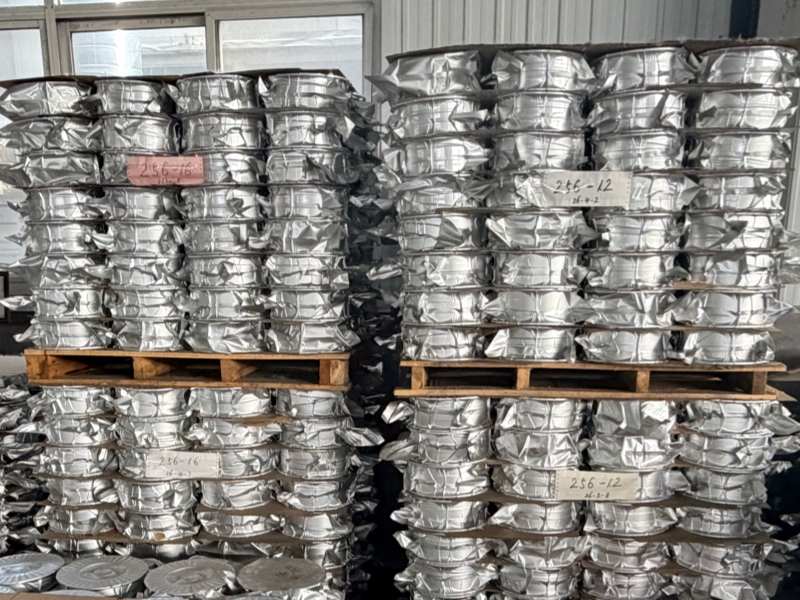
silver brazing wire
- Wholesale supply from Yiwu, China — for distributors, importers and industrial manufacturers. Minimum order: 5 kg per alloy and size Custom packaging & private label Shipment within 15 days Trade accounts only — no retail orders
- INQUIRY
Silver Brazing Wire (Silver Brazing Alloy Wire)
Wholesale supply from Yiwu, China — for distributors, importers and industrial manufacturers.
1. What this product is, in engineering terms
Silver brazing wire is a silver-based brazing filler metal supplied in continuous coil or spool form. It is used where a joint has to be made above the soldering threshold of 450 °C while the parent metals stay solid: the wire is melted by a torch, induction coil, resistance set-up or furnace, and capillary action draws the molten alloy into a controlled gap between two cleaned surfaces.
The practical consequences of that mechanism shape every specification decision on this page:
The base metal does not melt. Dimensional accuracy, temper and machined geometry survive the cycle, which is why brazing is used for thin-wall copper tube, instrument assemblies and carbide tips that would be damaged by fusion welding.
Dissimilar metals can be joined. Copper to stainless steel, brass to carbon steel, carbide to tool steel — combinations that form brittle intermetallics when welded.
The gap controls the joint. Capillary flow needs a gap in the region of 0.05–0.15 mm for flux brazing with silver fillers. Too tight and the alloy cannot enter; too wide and capillary pull is lost and the joint becomes a thick, weaker casting of filler metal.
Surface condition is part of the process. Oxide, oil and plating have to be removed, and the correct flux (or a controlled atmosphere) has to be matched to both the base metal and the alloy's working temperature.
Where silver brazing wire is chosen over rod or preform: continuous feed on automated or semi-automated cells, long seams, repetitive tube-to-fitting work, ring-and-wire assemblies, and any line where an operator benefits from a spool rather than handling individual 500 mm rods.
2. Alloy selection table
Values below are nominal and given for selection guidance. Each shipment is produced to an alloy specification agreed before order placement, and the values printed on the batch test certificate govern. Melting behaviour, flow and fillet appearance vary slightly between standard editions; tell us which standard your drawings or customers cite and we quote to that edition.
Cadmium-free grades (our standard range)
| Our ref. | AWS A5.8 | ISO 17672 | EN 1044 | Ag % | Cu % | Zn % | Other % | Solidus °C | Liquidus °C | Fits these jobs |
|---|---|---|---|---|---|---|---|---|---|---|
| SW-25Sn | BAg-37 | Ag 125 | AG 108 | 25 | 40 | 33 | Sn 2 | 680 | 760 | Copper alloys, brass fittings, cost-controlled general joints |
| SW-30 | BAg-20 | Ag 230 | AG 204 | 30 | 38 | 32 | — | 680 | 765 | Wide-gap work, ductile fillets, vibration service |
| SW-30Sn | — | Ag 130 | AG 107 | 30 | 36 | 32 | Sn 2 | 665 | 755 | Copper, brass and mild steel, mixed production |
| SW-34Sn | — | Ag 134 | AG 106 | 34 | 36 | 27.5 | Sn 2.5 | 630 | 730 | Refrigeration pipework, lower brazing temperature |
| SW-38Sn | BAg-34 | Ag 138 | — | 38 | 32 | 28 | Sn 2 | 650 | 720 | HVAC/R coils, heat exchangers, copper-to-steel |
| SW-40Sn | BAg-28 | Ag 140 | AG 105 | 40 | 30 | 28 | Sn 2 | 650 | 710 | Dissimilar metals, general fabrication |
| SW-40Ni | BAg-4 | Ag 440 | — | 40 | 30 | 28 | Ni 2 | 670 | 780 | Cemented carbide, stainless assemblies |
| SW-45 | BAg-5 | Ag 245 | — | 45 | 30 | 25 | — | 670 | 745 | General purpose, brass, instruments, lighting |
| SW-45Sn | BAg-36 | Ag 145 | AG 104 | 45 | 27 | 25.5 | Sn 2.5 | 640 | 680 | Vibration-loaded parts, low-temperature service |
| SW-50Ni | BAg-24 | Ag 450 | — | 50 | 20 | 28 | Ni 2 | 660 | 710 | Carbide tool tips, wear parts |
| SW-56Sn | BAg-7 | Ag 156 | AG 102 | 56 | 22 | 17 | Sn 5 | 618 | 652 | Stainless steel, food-contact and potable-water hardware |
| SW-72 | BAg-8 | Ag 272 | AG 401 | 72 | 28 | — | — | 779 | 779 | Eutectic alloy for vacuum and controlled-atmosphere furnace brazing, electrical joints |
Phosphorus-bearing copper alloys (self-fluxing on copper)
| Our ref. | AWS A5.8 | Ag % | P % | Solidus °C | Liquidus °C | Note |
|---|---|---|---|---|---|---|
| CP-2 | BCuP-2 | — | 7.0–7.5 | 710 | 793 | Copper-to-copper, close fit-up, no separate flux on clean copper |
| CP-5 | BCuP-5 | 15 | 5.0 | 643 | 802 | Copper tube work with wider tolerance and better ductility |
These phosphorus alloys flux themselves on copper. They are not used on ferrous metals, nickel alloys or zinc-bearing brass: phosphorus forms brittle intermetallic compounds there. For any joint that includes steel, stainless steel, nickel or brass, select a silver grade from the table above.
Cadmium-bearing grades
BAg-1 (45Ag-15Cu-16Zn-24Cd, melting around 607–618 °C) and similar cadmium-bearing compositions can be produced where local regulation and the end application allow it. Cadmium oxide fume is hazardous and subject to strict occupational exposure limits in most markets, so we ask for the destination country and the intended application before quoting these grades. Most enquiries we receive are now served by cadmium-free alternatives with comparable flow.
3. Forms, dimensions and tolerances
| Parameter | Standard range | Notes |
|---|---|---|
| Wire diameter | 0.25 mm – 3.0 mm | 0.8 / 1.0 / 1.2 / 1.6 / 2.0 / 2.4 / 3.0 mm held as running stock sizes |
| Diameter tolerance | Agreed per order; typical production control ±0.03 mm up to 1.6 mm | Tighter bands quoted on request for automated feed equipment |
| Supply form | Spool, coil, straight lengths | Spool for continuous feed, coil for bench work, cut lengths for kits |
| Spool weight | 1 kg, 2 kg, 5 kg, 10 kg | Spool flange type confirmed before production |
| Straight lengths | 450 / 500 / 1,000 mm | Cut-to-length available |
| Surface | Bright drawn, oil-free | Clean surface matters for wetting and for flux adhesion |
| Flux-coated wire | 1.5 – 3.0 mm | Reduces a separate fluxing step on manual work |
| Other forms from the same alloys | Rods, rings and preforms, strip and foil, paste, powder | Useful when you standardise one alloy across several joint designs |
Diameter, temper and spool type are confirmed in writing before production starts. Automated feed systems are sensitive to cast, helix and spool geometry, so we ask which machine the wire runs on when the enquiry comes from a production line rather than a workshop.
4. Choosing the alloy: four questions that settle most enquiries
1. What are the parent metals? Copper-to-copper with a tight fit can run on a BCuP alloy and needs no separate flux. Add steel, stainless steel, nickel or brass and phosphorus alloys are off the table — choose from the silver grades. Stainless steel responds better to tin-bearing and nickel-bearing grades, which wet a chromium oxide surface more readily.
2. What is the heating method? Torch, induction, resistance and furnace each impose a different thermal profile. Short melting ranges suit fast, localised heating: the alloy moves quickly and sets quickly. Wider melting ranges give the operator time to work the filler into a loose or uneven gap, which is why they are specified for gap-filling and for hand work on variable fit-up.
3. What happens to the joint in service? Sustained temperature, vibration, pressure, food or potable-water contact, and post-braze cleaning all narrow the choice. Tin-bearing and nickel-bearing grades are common for vibration and for carbide. Cadmium-free grades are specified where the finished assembly goes into occupied buildings, food equipment or medical hardware.
4. What clearances can the parts hold? Design for roughly 0.05–0.15 mm per side for silver filler metal with flux, and remember that the gap which matters is the one at brazing temperature. Dissimilar metals expand at different rates: a copper part inside a steel bore will close the gap as it heats. Where a joint is furnace brazed without flux, a much tighter fit is normal.
5. Process guidance we share with customers
These are starting points, not process instructions. Final parameters depend on part mass, joint design and the equipment on your floor; we are glad to review them against your application before you commit to a production quantity.
Cleaning. Remove oil, oxide, paint and plating from the joint faces. Mechanical cleaning followed by degreasing is standard. Braze soon after cleaning.
Flux. General-purpose fluoride-borax flux to AWS A5.31 FB3-A / FB3-C for the 600–900 °C band; more active flux for stainless steel and for long heating cycles. Flux-coated wire is available for manual work, and we still recommend paste flux on the joint faces for longer seams.
Flame. A neutral to slightly reducing flame. Heat the parts, not the wire; draw the filler in with the temperature of the joint.
Induction. Heating rates in the region of 20–40 °C/s with a short hold after full penetration are common for steel and copper assemblies.
Furnace. Preheat to roughly 50 °C below the solidus, then braze about 20 °C above the liquidus. Use zinc-free and cadmium-free grades (SW-72 is the usual candidate) when working under vacuum or dry hydrogen, since volatile elements are not welcome in a furnace.
After brazing. Cool naturally, then remove flux residue. Residual flux is corrosive; warm water soak and brushing is often enough, and a dilute acid pickle is used where residue has been overheated. Rinse thoroughly.
Health and safety. Cadmium in any form requires local exhaust ventilation and occupational exposure control. Zinc-bearing alloys can fume if overheated. Flux generates fumes on heating. Work to your local occupational hygiene rules.
6. How each batch is made and checked
Silver brazing wire fails in predictable ways: silver content below the declared figure, contamination from recycled input, zinc loss during melting, an incorrect melting range, or a surface film that blocks wetting. The production route is arranged to close those failure modes.
Charge make-up. Fresh cathode copper, zinc and tin of declared grade, plus silver of stated fineness, weighed to the alloy specification. Input material is documented before it enters the melt.
Melting. Induction melting under a protective cover, with melt temperature and holding time controlled to hold the composition inside the specified band and limit zinc loss.
Casting and working. Cast billet, hot working, then drawing with intermediate annealing. Draw practice is set to reach the agreed diameter and temper without surface defects.
Cleaning. Surface cleaning after drawing, so the wire reaches the joint free of drawing lubricant and oxide.
Verification. Spectrometric or wet chemical analysis of each heat; melting range checked on representative samples; diameter, surface and spool geometry inspected against the order.
Identification. Each coil or spool carries a batch number that links back to the heat, the inspection record and the shipping documents.
Documentation. A material test certificate is issued per batch with the measured composition and melting data. Third-party inspection can be arranged when your customer or your own quality system requires it, with the scope and the inspector agreed before production.
If your incoming inspection has a defined sampling plan or a specific test method, send it with the enquiry. Matching the test method at quotation stage avoids disagreement at goods-in.
7. Where the wire is used
HVAC and refrigeration — copper tube, capillary tubes, four-way valves, compressor shells, heat exchangers, brass-to-copper transitions.
Cemented carbide and diamond tools — saw blade tips, drill bits, mining and road-milling picks, PDC cutters, where nickel-bearing grades are common.
Electrical and electronics — contacts, busbars, commutators, terminal assemblies, waveguides and hermetic packages.
Automotive and transport — pipe assemblies, heat exchangers, sensor housings, brake and fuel line fittings.
Stainless steel fabrication — food processing equipment, catering hardware, medical devices, potable-water fittings, typically on cadmium-free grades.
General industry — valves, pumps, hydraulic fittings, measuring instruments, eyewear frames, musical instruments, jewellery manufacture.
8. Why buyers source this item through Yiwu
Yiwu is known as a consumer-goods marketplace, and that is exactly why industrial consumables move efficiently through it.
Logistics density in one city. Freight forwarders, customs brokers, inspection agencies, consolidation warehouses, packaging suppliers and export insurers operate within a short distance of each other. A consolidated shipment of brazing wire, flux, rings and related consumables can be assembled, documented and loaded without the coordination delays typical of a single-factory export.
Two export corridors. Sea freight moves through Ningbo-Zhoushan and Shanghai; rail freight to Europe and Central Asia runs on the Yiwu-based China-Europe service. Air and express handle sample and urgent repeat orders. Which corridor suits you depends on your volume, destination and required transit time; we quote all three against your order.
Small-lot export mechanics. Yiwu operates the market-trade export procedure used for multi-SKU, small-value shipments, which simplifies declaration for consolidated orders. Eligibility depends on the shipment profile and is confirmed case by case.
Multi-SKU consolidation. A distributor rarely orders one alloy. Silver brazing wire, flux-coated rods, preformed rings, strip and flux commonly travel in the same container. Consolidating at Yiwu reduces per-line logistics cost and gives you one document set.
Working-hours overlap. Our commercial team sits in the same time zone as the production bases and covers European and Asian business hours in a normal working day.
9. How the partner production base model works
We are a Yiwu-based supply organisation. Production takes place at partner brazing-material facilities that we work with on a continuing basis. That structure is deliberate, and it changes what you get:
Each base runs the alloy families it holds process data for. Wire drawing of high-silver cadmium-free alloys, flux-coated products, and preform pressing are different disciplines. Work is placed where the process history exists rather than forced onto one line.
Parallel scheduling. Several bases can run at once. When an order covers multiple alloys and forms, production is not queued behind a single plant's schedule, which is how the 15-day shipment commitment holds during busy periods.
One specification, several plants. Alloy composition windows, inspection items and documentation format are issued by us and applied identically at each base. The certificate you receive has the same structure regardless of which plant produced the batch.
Silver price transparency. Quotations are built from a named silver benchmark agreed at quotation time (LBMA silver price or a Shanghai domestic benchmark, as you prefer) plus a conversion charge. The benchmark value and its date appear on the quotation, so a price movement is traceable rather than asserted.
Commercial accountability stays in one place. Order entry, specification confirmation, inspection, packing and export documents are handled by the Yiwu team. You have one commercial counterpart for technical questions, claims and repeat orders.
10. Commercial terms
| Term | Our position |
|---|---|
| Minimum order quantity | 5 kg per alloy and size. A 5 kg quantity is enough to run a real process trial on your own equipment rather than a bench sample. |
| Packaging | Customised to your market: 1 / 2 / 5 / 10 kg spools or coils, vacuum or moisture-barrier inner bag, export carton, palletisation, neutral or private-label sleeves, multi-language labels, barcodes and batch coding. |
| Lead time | Shipment within 15 days of order and specification confirmation for standard grades and sizes. Special compositions, large volumes or exceptional raw-material conditions are confirmed individually before you commit. |
| Accounts served | Wholesale and industrial accounts only — importers, distributors, welding consumable wholesalers, OEM and contract manufacturers, and industrial end users. |
| Orders we do not accept | Consumer and single-piece retail orders. Technical support, batch documentation, export paperwork and volume pricing are built around trade accounts; a retail channel cannot be served at the same level, so we do not attempt it. |
| Incoterms | EXW, FOB, CIF, DAP and others, quoted against your destination. |
| Payment | T/T and L/C at sight, with terms agreed by order size and account history. |
| Samples | Small sample lengths for alloy verification are available for trade accounts; express cost is borne by the buyer. |
| Documents | Material test certificate per batch, packing list, commercial invoice, certificate of origin; inspection reports arranged on request. |
11. Frequently asked questions
Is silver brazing wire the same as silver solder wire? The terms are used interchangeably in trade. Standards bodies define brazing by a filler liquidus above 450 °C, and the alloys on this page fall in the 600–800 °C band, which makes them brazing filler metals. If your drawings say "silver solder", give us the composition or the AWS / ISO / EN designation and we will match it.
Which alloy joins copper tube to stainless steel? A tin-bearing or nickel-bearing silver grade in the 40–56 % silver band is the usual answer. Phosphorus-bearing copper alloys are not suitable, because phosphorus reacts with iron and nickel to form brittle compounds.
Do you supply cadmium-free material for EU and UK markets? Yes. Most of our regular production is cadmium-free. Cadmium-bearing grades can be quoted where your market and application permit, and we ask for the destination and end use before doing so. RoHS and REACH screening reports can be arranged for the specific alloy ordered.
How is silver content verified? Each heat is analysed before working, and the measured composition is printed on the batch certificate. Third-party assay can be arranged as part of the order when you need independent confirmation.
Can I start with a small quantity before committing to a container? Yes, from 5 kg per alloy and size, which is a workable trial quantity on production equipment. Many accounts validate one or two alloys at this level, then consolidate into a full shipment.
Do you do private-label packaging? Yes — spool weight, sleeve artwork, label language, barcode format and carton marking are produced to your specification. Artwork is confirmed before the run.
What diameters are available? 0.25–3.0 mm as standard, with 0.8 / 1.0 / 1.2 / 1.6 / 2.0 / 2.4 / 3.0 mm as running sizes. Tell us which feeder or process the wire runs on and we will confirm diameter, cast and spool type together.
How quickly can you ship? Within 15 days of order and specification confirmation for standard grades and sizes. Timing for special alloys is confirmed before you place the order.
Do you sell to individual buyers or workshops buying a single spool? No. We work with distributors, importers and industrial users. Trade accounts receive the technical documentation and volume pricing that a retail transaction cannot support.
Can you make rings and preforms from the same alloy? Yes. Rings, washers, strips and stamped preforms are produced from the same alloy specification, which keeps composition consistent across the different forms used on one assembly.
How do silver price movements affect my quotation? Quotations are built on a named benchmark with its date shown on the offer, so you can see how the silver component of the price was derived. For long-term supply, we can agree a pricing mechanism instead of re-quoting each shipment.
12. Send an enquiry that can be answered the same day
Most delays come from missing information, not from production. Include these seven items and we can quote, or tell you what else we need, quickly:
Alloy designation or the standard you work to (AWS A5.8, ISO 17672, EN 1044, GB/T, or a composition).
Form and size: wire diameter, spool or coil, spool weight, or cut lengths.
Parent metals and the joint design, including the gap the parts hold.
Heating method: torch, induction, resistance, furnace, and whether flux is used.
Quantity per alloy and size, and whether this is a trial or a repeat programme.
Packaging and marking: private label or neutral, label language, barcode requirement.
Destination, preferred Incoterm and whether consolidation with other items is planned.
Trade accounts only — distributors, importers and industrial users. Minimum order 5 kg per alloy and size. Custom packaging available. Shipment within 15 days of order confirmation.
Send an enquiry that can be answered the same day. Include alloy designation or standard, wire diameter and form, parent metals and gap, heating method, quantity, packaging and marking, and destination with preferred Incoterm.
Trade accounts only — distributors, importers and industrial users. Minimum order 5 kg per alloy and size. Custom packaging available. Shipment within 15 days of order confirmation.
Specifications on this page are nominal and provided for selection guidance; values on the batch test certificate govern.